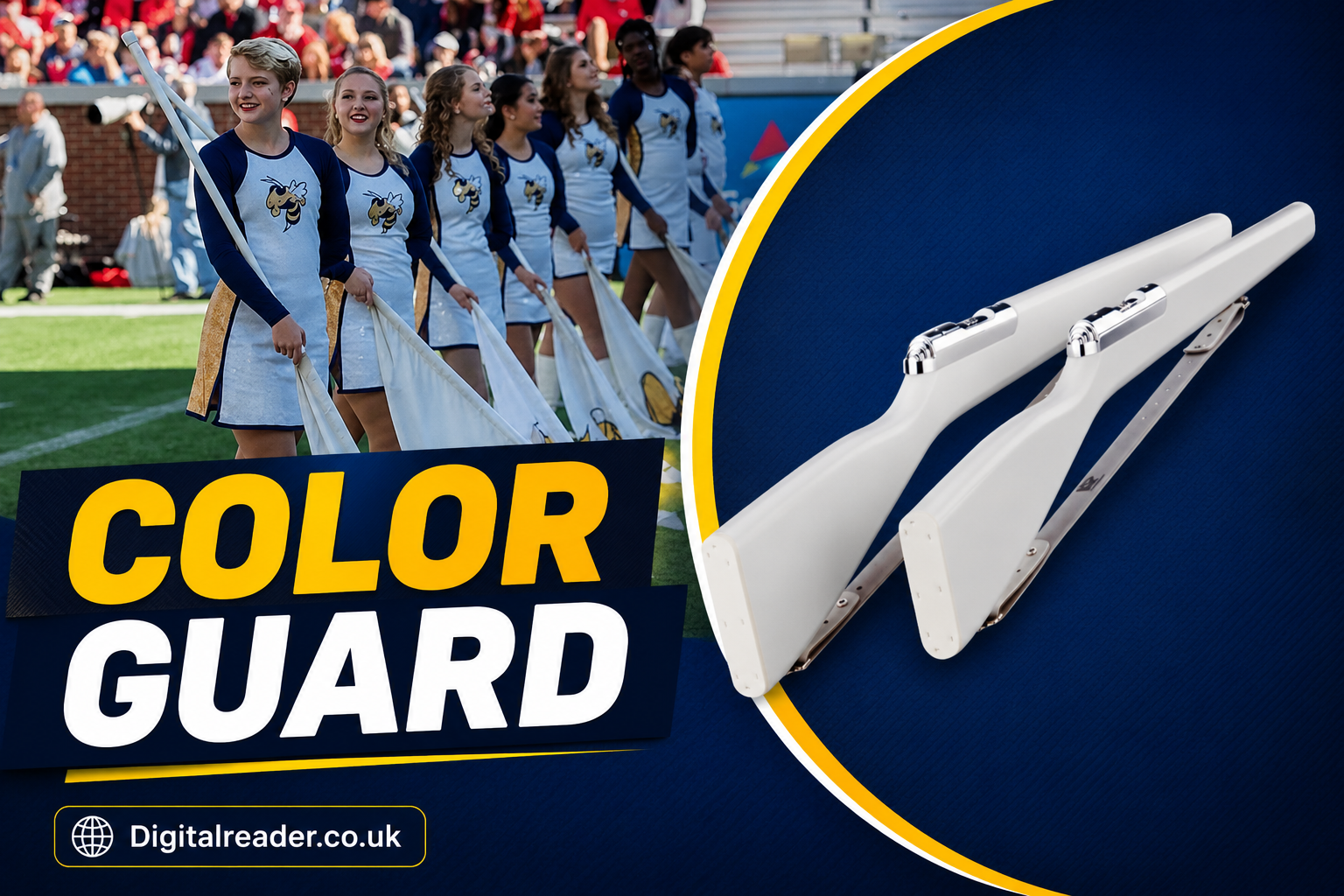
Ever watched a marching band halftime show and found yourself completely captivated by the performers spinning flags and tossing rifles high into the air — while having absolutely no idea what that part of the group is even called or how it works?
You’re not alone. Color guard is one of the most visually stunning parts of a marching band or indoor winter guard performance, yet it’s also one of the least understood from the outside. Parents searching for uniform options, students prepping for tryouts, and even gardeners who stumbled onto “color guard” while shopping for a yucca plant all end up confused by conflicting search results.
This guide sorts it all out. You’ll learn exactly what color guard is, how the equipment (including the color guard rifle) actually works, what makes a good uniform, how tryouts typically go, and — because the search term overlaps with a completely unrelated topic — what the Color Guard yucca plant is too, so you land on the right answer no matter which “color guard” brought you here.
What Is Color Guard ?
Color guard is a performance team, typically affiliated with a marching band, that uses equipment like flags, rifles, and sabres to add a visual, dance-like element to a musical performance. Performers, often called “guard members,” synchronize choreography and equipment work with the band’s music to enhance the overall show.
A Brief History of Color Guard
Color guard traces its roots back to military tradition, where designated soldiers carried and protected a unit’s flag or “colors” in battle — a role considered a high honor. Over the 20th century, that ceremonial role evolved into a performance-based activity, first as a purely visual complement to marching bands, then into its own competitive discipline with choreography, equipment technique, and artistic themes independent of any specific band. & more blogs to see neural .
How Color Guard Fits Into Marching Band and Winter Guard
Most students first encounter color guard as part of a school marching band during football season, performing outdoors alongside the band on a field. Many of those same performers then move into “winter guard” — an indoor, band-independent version of the activity performed to recorded music on a gym floor, judged purely on equipment work, choreography, and visual design. Winter guard is often considered the more competitive, technically demanding version of the activity.
Color Guard Equipment Explained
The Color Guard Rifle
A color guard’s rifle is a wooden, non-firing replica rifle used as performance equipment, designed to be tossed, spun, and caught as part of choreographed routines. Unlike a real firearm, it has no moving parts, no barrel opening, and no functional mechanism — it exists purely as a performance prop, typically weighted and balanced for consistent spins and tosses.
Rifles are considered one of the more advanced pieces of color guard equipment because of the skill required to control multiple rotations in the air while catching it cleanly, often while also moving through choreography.
Flags, Sabres, and Other Equipment
- Flags — the most iconic and widely used piece of equipment, ranging from small “flag work” pieces to large silks used for sweeping visual effects.
- Sabres — a lightweight, blunt-edged prop styled after a saber, used similarly to rifles for tosses and spins, but generally considered easier for beginners to start with.
- Rifles — as described above, the most technically demanding standard equipment piece.
- Prop and dance work — many modern shows also incorporate hand choreography and interpretive dance elements without equipment.
Color Guard Uniforms
What Makes a Good Color Guard Uniform
A well-designed color guard’s uniform needs to balance several competing demands:
- Freedom of movement — performers need to spin, kick, and extend fully without fabric restricting motion.
- Visual impact — uniforms are designed to read clearly from a distance, often using bold colors, movement-friendly fabrics like spandex or metallic blends, and design elements that echo the show’s theme.
- Durability — with repeated tosses, drops, and equipment contact, uniforms need reinforced stitching and durable fabric.
- Weather adaptability — outdoor marching season uniforms often need layering options for cold-weather performances, while winter guard uniforms are built purely for an indoor gym environment.
Uniform Trends and Considerations
Many programs now commission custom-designed uniforms tailored to each year’s specific show theme, rather than reusing generic stock designs season after season. This trend has grown alongside increased competition standards, where visual design (including uniforms) is scored alongside equipment and choreography at many competitive events.
How to Join Color Guard: A Step-by-Step Guide
- Check with your school’s band or guard director. Most programs run tryouts in the spring for the following school year.
- Attend an informational meeting or clinic. Many programs offer beginner clinics that teach basic flag, rifle, or sabre technique before tryouts.
- Practice fundamentals early. Basic flag spins, tosses, and body technique (posture, extension, and dance basics) are commonly assessed at tryouts.
- Attend tryouts with appropriate gear. Comfortable athletic clothing and, if available, a practice flag are typically expected.
- Learn choreography quickly during callbacks. Many tryouts include a short combination taught on the spot to evaluate how quickly you pick up new material.
- Ask about summer rehearsal commitments. Marching band season often begins with intensive summer practices before the school year starts.
Color Guard vs. Winter Guard vs. Dance Team
| Feature | Color Guard (Marching) | Winter Guard | Dance Team |
|---|---|---|---|
| Season | Fall (football season) | Winter/early spring | Varies, often year-round |
| Setting | Outdoor field | Indoor gym floor | Indoor, varies |
| Music | Live marching band | Recorded music | Recorded music |
| Equipment | Flags, rifles, sabres | Flags, rifles, sabres | Typically none |
| Judging focus | Visual complement to band | Equipment, choreography, visual design | Dance technique, formations |
The Color Guard Yucca Plant: A Completely Different “Color Guard”
If your search for “color guard” was actually about gardening, here’s the answer you’re looking for.
‘Color Guard’s’ is a popular cultivar of Yucca filamentosa (commonly called Adam’s Needle), known for its variegated, sword-shaped leaves featuring creamy-yellow centers with green margins.
The Color Guard yucca is a low-maintenance, drought-tolerant perennial widely used in landscaping. Here’s a quick care overview:
- Hardiness zones: 4–10
- Sun needs: Full sun to part sun
- Height/spread: Roughly 2–3 feet tall and wide, with flower spikes reaching 4–6 feet when in bloom
- Watering: Drought-tolerant once established; prefers well-drained soil and should dry out between waterings
- Bloom time: Late spring to midsummer, producing tall spikes of creamy white, bell-shaped flowers
- Seasonal interest: Foliage often takes on a pink or rose tint in colder months
- Wildlife notes: Generally deer- and rabbit-resistant, and attractive to pollinators like butterflies and hummingbirds
It’s a completely unrelated topic to marching band color guard — the shared name is coincidental — but it’s a genuinely popular, low-maintenance choice for xeriscaping, rock gardens, and container planting.
Pros and Cons of Doing Color Guard
| Pros | Cons |
|---|---|
| Builds coordination, discipline, and performance skills | Requires significant time commitment, especially in marching season |
| Strong sense of team and community | Equipment costs (flags, rifles, uniforms) can add up |
| Opportunities for scholarships at the collegiate level | Physically demanding, with risk of minor injuries from drops or catches |
| Highly visual, creative outlet | Competitive programs can involve early mornings and long rehearsals |
Mistakes to Avoid as a Color Guard Beginner
- Skipping fundamentals to rush into rifle or sabre work. Solid flag technique builds the body control needed for more advanced equipment.
- Using poor-quality practice equipment. A cheap, poorly balanced practice flag or rifle can slow down skill development and create bad habits.
- Ignoring conditioning. Color guard is more physically demanding than it looks; basic strength and flexibility training helps prevent injury.
- Underestimating the uniform fitting process. Poorly fitted uniforms can restrict movement during performance — fittings should happen well before the season starts.
- Confusing marching guard and winter guard expectations. The judging criteria and pacing differ significantly between the two, and treating them identically can hold a performer back in either setting.
Why This Matters
Color guard’s sits at an interesting intersection of athletics, performing arts, and team culture, yet it’s frequently overlooked or misunderstood compared to other school activities. Understanding what the activity actually involves — the equipment, the training, the uniform considerations — helps parents and prospective members make informed decisions about joining, and gives the activity the same level of respect typically given to other competitive extracurriculars. It also matters simply for clarity: with a completely unrelated gardening product sharing the same name, getting accurate, intent-matched information saves confused searchers real time.
Expert Recommendations
- Start with flag work before advancing to rifle or sabre. Most experienced instructors recommend building fundamental body technique first.
- Invest in a properly weighted practice rifle if you’re serious about advancing. Off-balance equipment makes learning tosses and catches significantly harder.
- Communicate with your director about uniform fit early. Waiting until the week of a performance to address fit issues creates unnecessary stress.
- Cross-train for flexibility and core strength. Many guard instructors recommend basic conditioning routines similar to dance or gymnastics training.
- If you’re growing Color Guard yucca, resist the urge to overwater. Its biggest care risk is root rot from soil that doesn’t drain well, not underwatering.
Conclusion
Color guard’s is a genuinely demanding, deeply rewarding activity that blends athleticism, artistry, and teamwork — whether you’re talking about flag work on a football field, advanced rifle tosses in winter guard competition, or the uniform design that ties an entire show together. And if you landed here searching for something entirely different, now you also know exactly what the Color Guard yucca is and how to care for it in your own garden.
Whether you’re preparing for tryouts, shopping for equipment and uniforms, or just satisfying your curiosity about a plant with an unexpected name, hopefully this guide gave you a clear, complete answer.
FAQs
What does color guard mean in marching band?
Color guard’s is the performance element of a marching band that uses equipment like flags, rifles, and sabres to add visual choreography synchronized with the band’s music.
Is color guard a sport?
Color guard’s is often classified as a performing art, but many programs and some state athletic associations recognize it as a competitive activity or sport due to its physical demands, structured competition format, and judged scoring system.
What is a color guard rifle made of?
A color guard’s rifle is a non-firing wooden or synthetic replica designed specifically for performance tosses and spins. It has no functional firing mechanism, barrel opening, or moving parts.
Do you need experience to join color guard?
No. Most school programs welcome beginners and offer clinics or introductory practices before official tryouts to teach basic flag, rifle, or sabre technique.
What’s the difference between color guard and winter guard?
Color guard’s typically performs outdoors during marching band season with live music, while winter guard performs indoors to recorded music and is judged independently on equipment work, choreography, and visual design.
What is the Color Guard yucca plant?
Color Guard’s yucca (Yucca filamentosa ‘Color Guard’) is a variegated ornamental perennial with sword-shaped, creamy-yellow and green striped leaves, known for being drought-tolerant and low-maintenance in landscaping.
How much does color guard equipment and uniforms cost?
Costs vary widely by program, but typically include a uniform fee, practice equipment (flags, rifles, or sabres), and sometimes additional costs for performance-specific gear, often ranging from a couple hundred to several hundred dollars per season depending on the school and program level.
In Short
- Color guard’s is the flag-, rifle-, and sabre-based performance element of a marching band, rooted in historical military color-bearing tradition.
- A color guard rifle is a non-firing performance prop, not a functional weapon, designed for tosses and spins.
- Winter guard is the indoor, band-independent version of the activity, judged separately on equipment and visual design.
- Good color guard uniforms balance freedom of movement, visual impact, and durability, often custom-designed around a show’s theme each season.
- Color Guard’s yucca (Yucca filamentosa ‘Color Guard’) is an entirely unrelated topic — a popular, drought-tolerant variegated landscaping plant.