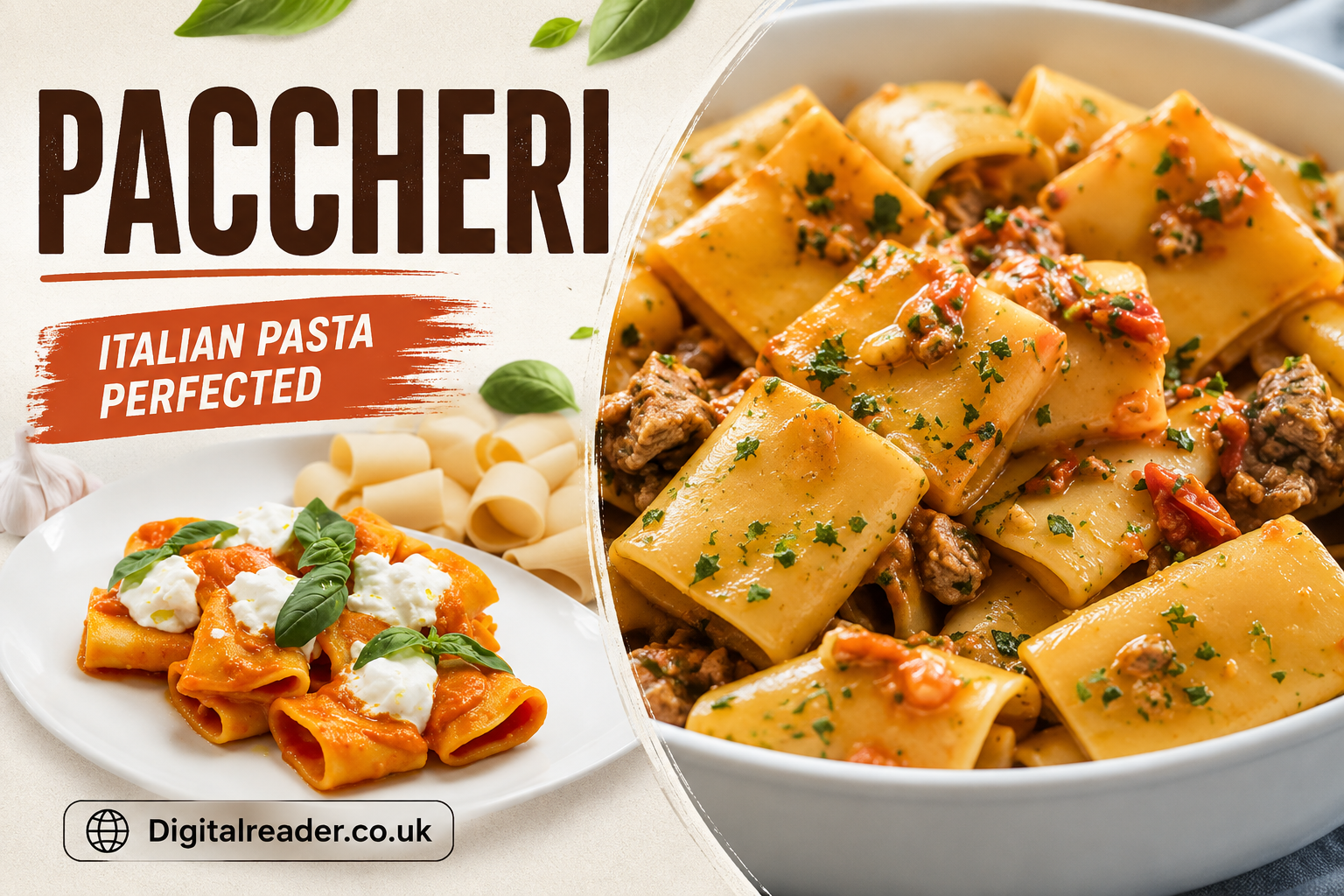
You’ve spotted it on an Italian restaurant menu or in the pasta aisle — giant, hollow tubes bigger than anything else on the shelf — and thought, “What on earth is this, and how am I supposed to cook it?”
That’s paccheri, and if you’ve never worked with it before, the confusion is completely understandable. It’s not rigatoni. It’s not ziti. It’s not even the same thing as its smaller cousin, mezzi paccheri, despite sharing a nearly identical name. And if you’ve seen “paccheri alla vodka” trending on food videos and recipe sites, you might be wondering whether it’s cooked any differently than a standard vodka sauce dish.
This guide answers all of it. You’ll learn exactly what paccheri’s is, where it comes from, how it compares to mezzi paccheri and rigatoni, how to cook it so it holds its shape instead of turning to mush, and a full step-by-step recipe for paccheri alla vodka that actually works.
What Is Paccheri Pasta?
Paccheri is a large, smooth or lightly ridged tube-shaped pasta from the Campania region of Italy, typically 2–3 inches long and wide enough to fit a finger through, traditionally paired with hearty tomato, seafood, or ragù sauces.
Where Paccheri Comes From
Paccheri’s originated in Campania, the region surrounding Naples, and remains closely associated with the town of Gragnano — a small coastal town famous for its long-standing pasta-making tradition, bronze-die extrusion, and slow air-drying methods that give the pasta a rougher, sauce-gripping surface. The name “paccheri” is generally traced to the Neapolitan dialect word for “slap,” a playful reference either to the sound the dough made during traditional preparation or to the way the pasta can slap against the plate as it’s served.
One well-known culinary legend claims that paccheri’s oversized, hollow shape was historically used to smuggle garlic cloves across borders into regions where Italian garlic imports were restricted — a colorful story that’s often repeated in food writing, even if it’s difficult to verify as strict historical fact. & more blogs to see fresh .
What Makes Paccheri Different From Other Tube Pasta
Paccheri’s stands out for three main reasons:
- Size — it’s noticeably wider and often longer than rigatoni or ziti, with some of the largest openings of any common tube pasta shape.
- Texture — many artisanal versions are bronze-extruded, giving the surface a slightly rough, porous texture that helps sauce cling to both the inside and outside of each piece.
- Serving style — because of its size, paccheri’s is often served with the tube laid on its side rather than standing upright, allowing sauce to pool inside and outside simultaneously.
Paccheri vs. Mezzi Paccheri vs. Rigatoni
A lot of confusion around this pasta comes from the fact that there isn’t just one version — “mezzi paccheri” literally means “half paccheri’s,” and it’s a genuinely different cut, not just a marketing term.
Mezzi paccheri’s are a shorter version of standard paccheri, roughly half the length, while keeping the same wide diameter. They cook slightly faster and are easier to portion, making them a popular choice for home cooks who want the same bite and sauce-holding ability without the larger tube’s more dramatic presentation.
Comparison Table
| Feature | Paccheri | Mezzi Paccheri | Rigatoni |
|---|---|---|---|
| Length | ~2.5–3 inches | ~1.25–1.5 inches | ~1.5–2 inches |
| Diameter | Widest of the three | Same width as paccheri | Narrower than paccheri |
| Surface | Smooth or lightly ridged | Smooth or lightly ridged | Ridged (rigate) |
| Best sauces | Chunky ragù, seafood, baked dishes | Same as paccheri, in smaller portions | Tomato-based, meat sauces |
| Cook time | Typically 10–12 minutes | Typically 8–10 minutes | Typically 9–11 minutes |
How to Cook Paccheri Perfectly
Step-by-Step Cooking Instructions
- Use a large pot with plenty of salted water. Paccheri’s needs room to move without sticking together, given its size.
- Bring water to a rolling boil before adding pasta. Adding it too early can cause uneven cooking.
- Stir immediately after adding the pasta. The hollow tubes can trap air and stick to the pot bottom if left unstirred.
- Cook to al dente, checking a minute or two before the package time. Because the tubes are thick, they can go from al dente to mushy faster than you’d expect once fully softened.
- Reserve a cup of pasta water before draining. The starchy water helps bind sauce to the pasta’s rough surface.
- Toss gently with sauce rather than stirring vigorously. Paccheri’s large, delicate walls can tear if handled too roughly once cooked.
Best Sauces for Paccheri
- Tomato-based ragù — a classic Neapolitan pairing that fills the tube’s interior with rich, slow-cooked sauce.
- Seafood sauces — clams, shrimp, or a light seafood ragù pair naturally with paccheri’s coastal Campanian roots.
- Baked, cheese-forward dishes — paccheri is often stuffed and baked with ricotta, mozzarella, or béchamel, similar to a jumbo stuffed shells preparation.
- Vodka sauce — a modern, widely popular pairing that balances the pasta’s substantial bite with a creamy, tangy sauce (more on this below).
Paccheri alla Vodka: A Complete Recipe Guide
If you searched specifically for “paccheri alla vodka,” here’s a complete, tested approach you can follow at home.
Ingredients You’ll Need
- 1 lb paccheri pasta
- 2 tablespoons olive oil
- 1 small yellow onion, finely diced
- 3 garlic cloves, minced
- 1/4 cup vodka
- 1 can (28 oz) crushed tomatoes
- 3/4 cup heavy cream
- 1/2 cup grated Parmesan, plus more for serving
- Red pepper flakes, to taste
- Salt and black pepper, to taste
- Fresh basil, for garnish
Step-by-Step Instructions
- Bring a large pot of salted water to a boil and cook the paccheri according to package instructions, reserving 1 cup of pasta water before draining.
- Sauté the onion in olive oil over medium heat until soft and translucent, about 5 minutes.
- Add the garlic and red pepper flakes, cooking for another 30–60 seconds until fragrant.
- Add the vodka and let it simmer for 2–3 minutes to cook off the alcohol, scraping up any browned bits from the pan.
- Stir in the crushed tomatoes and simmer for 10–15 minutes, stirring occasionally, until slightly thickened.
- Lower the heat and stir in the heavy cream and Parmesan, whisking until smooth and fully combined.
- Add the cooked paccheri directly to the sauce, tossing gently to coat, using reserved pasta water to loosen the sauce if needed.
- Season to taste with salt and pepper, then serve topped with fresh basil and extra Parmesan.
Pros and Cons of Cooking With Paccheri
| Pros | Cons |
|---|---|
| Excellent sauce-holding capacity due to its hollow shape | Requires careful, gentler handling once cooked |
| Impressive presentation for entertaining | Not always stocked at smaller grocery stores |
| Versatile — works baked, sauced, or stuffed | Can turn mushy quickly if slightly overcooked |
| Distinctive texture from bronze-die versions | Generally pricier than standard rigatoni or penne |
Mistakes to Avoid When Cooking Paccheri
- Overcooking past al dente. Because the walls are thick, paccheri can seem undercooked right up until it suddenly becomes too soft — check early and often.
- Skipping the salted pasta water. Paccheri’s large surface area needs well-seasoned water to avoid tasting bland at the center.
- Using a sauce that’s too thin. Because the tubes are so large, a watery sauce won’t cling well — thicker, well-reduced sauces perform far better.
- Stirring too aggressively after cooking. The pasta walls are more fragile than they look and can tear under rough handling.
- Confusing paccheri and mezzi paccheri cook times. Since mezzi paccheri is shorter, it cooks faster — using the same timing for both can lead to inconsistent results.
Why This Matters
Paccheri’s is a great example of how much regional Italian pasta traditions vary beyond the handful of shapes most American home cooks default to. Understanding the difference between paccheri, mezzi paccheri, and more familiar shapes like rigatoni isn’t just trivia — it directly affects how a dish turns out, since sauce thickness, cook time, and even how gently you handle the pasta all change based on shape. For home cooks looking to expand beyond spaghetti and penne, paccheri offers an approachable way to bring authentic, regional Italian technique into a weeknight meal.
Expert Recommendations
- Look for bronze-die extruded paccheri if you can find it. The rougher texture makes a noticeable difference in how well sauce clings to the pasta.
- Match sauce thickness to tube size. Thinner sauces get lost inside paccheri’s large hollow center — go for something that can coat and cling.
- Use mezzi paccheri for weeknight cooking. It delivers the same texture and bite as full-size paccheri with a shorter cook time and easier portioning.
- Don’t skip resting the vodka sauce briefly before tossing in the pasta. A few extra minutes of simmering helps the alcohol fully cook off and the flavors meld.
- Save pasta water every time. With a pasta this substantial, starchy water is often the difference between a sauce that clings and one that pools at the bottom of the bowl.
Conclusion
Paccheri’s isn’t just an oversized pasta shape for show — it’s a genuinely versatile, Campania-rooted pasta with its own cooking rules, its own best-suited sauces, and its own smaller sibling in mezzi paccheri’s. Whether you’re recreating a classic Neapolitan ragù, baking a stuffed paccheri casserole, or making paccheri alla vodka for a weeknight dinner that feels a little more special, understanding how this pasta actually behaves in the pot makes all the difference between a great dish and a mushy one.
Ready to give it a try. Pick up a box of paccheri or mezzi paccheri’s, follow the step-by-step vodka sauce recipe above, and see how this giant Italian tube earns its reputation.
FAQs
What is paccheri pasta made of?
Traditional paccheri’s is made from durum wheat semolina and water, the same base ingredients used in most dried Italian pasta shapes, giving it a sturdy structure that holds up to hearty sauces.
What’s the difference between paccheri and mezzi paccheri?
Mezzi paccheri’s are roughly half the length of standard paccheri while keeping the same wide diameter, making them faster to cook and easier to portion, but otherwise very similar in texture and sauce compatibility.
How is paccheri different from rigatoni?
Paccheri’s is wider and often longer than rigatoni, with a larger hollow center. Rigatoni typically has ridges (rigate) along its surface, while paccheri can be smooth or lightly ridged, depending on the brand.
How long does paccheri take to cook?
Standard paccheri’s typically takes 10–12 minutes to reach al dente, while mezzi paccheri usually cooks in 8–10 minutes. Always check a minute or two before the package’s suggested time, since the thick walls can go from firm to soft quickly.
What sauce goes best with paccheri?
Paccheri’s pairs especially well with thick, chunky sauces like tomato-based ragù, seafood sauces, and vodka sauce, since its large hollow shape is designed to hold substantial amounts of sauce inside and around each tube.
Can I stuff paccheri like manicotti?
Yes. Paccheri’s wide diameter makes it a popular choice for stuffing with ricotta, mozzarella, or meat fillings, then baking with sauce and cheese, similar to a jumbo stuffed shells or manicotti dish.
Is paccheri alla vodka the same as regular vodka sauce pasta?
The sauce itself is prepared the same way as a classic vodka sauce, but paccheri’s larger, hollow shape holds significantly more sauce per bite than penne or rigatoni, giving the dish a heartier, richer overall texture.
In Short
- Paccheri is a large, hollow tube pasta originating from Campania, Italy, closely associated with the pasta-making town of Gragnano.
- Mezzi paccheri is a shorter version of the same pasta, offering the same texture with faster cooking and easier portioning.
- Paccheri pairs best with thick, chunky sauces like ragù, seafood sauces, and vodka sauce, thanks to its large sauce-holding interior.
- Overcooking is the most common mistake — check a minute or two before package time to avoid mushy results.
- Paccheri alla vodka follows a standard vodka sauce method, but the pasta’s size means it holds significantly more sauce per bite than smaller shapes.