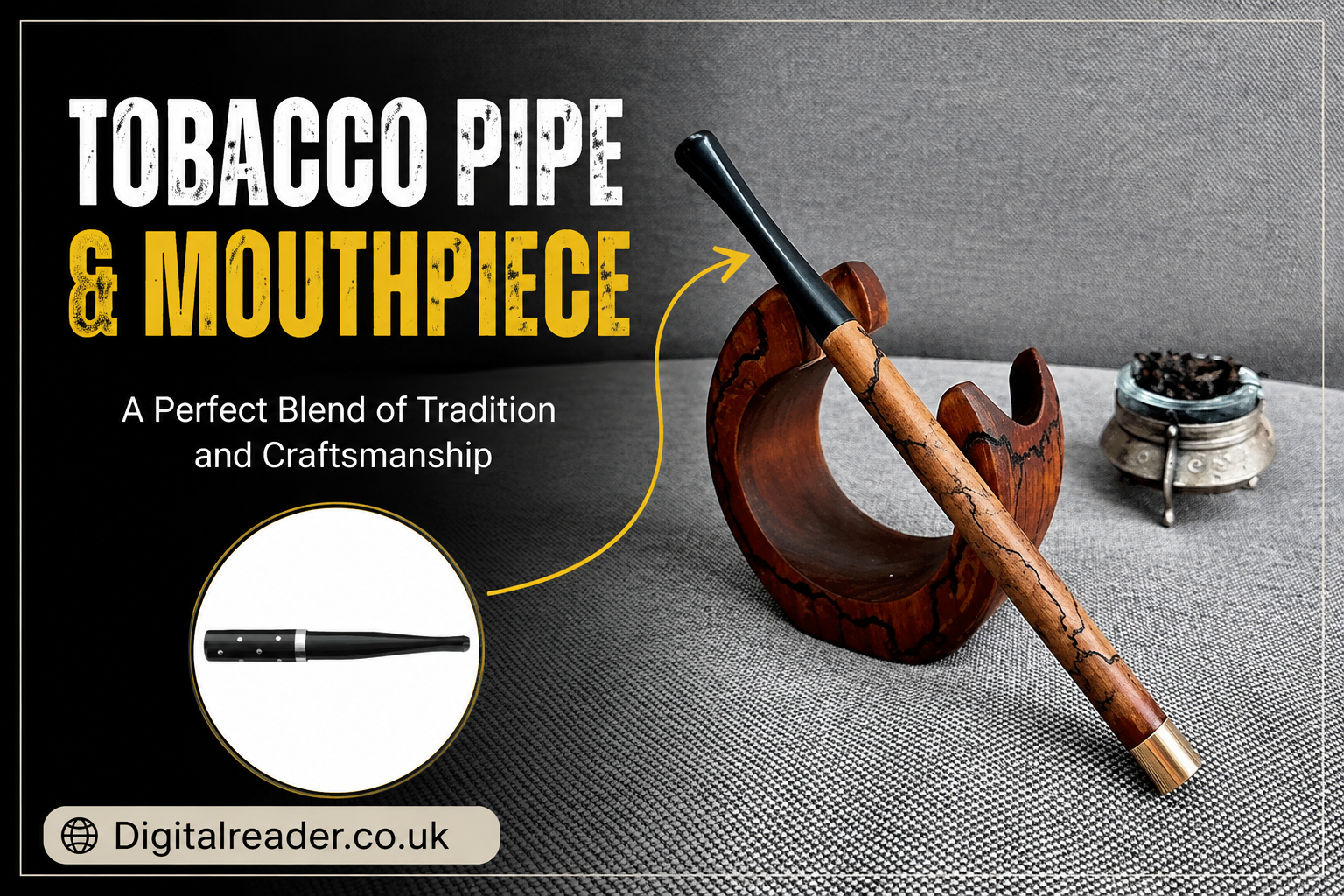
A cigarette holder is a small tube-shaped accessory, typically two to six inches long, designed to hold a cigarette so it can be smoked without touching the fingers or lips directly. Cigarette holders were fashionable from around 1910 through the 1970s and were made from materials ranging from simple wood and Bakelite to carved ivory, amber, and gold.
Today, most searches for “vintage cigarette holder” and “long cigarette holder” aren’t about smoking at all — they’re about fashion history, film costuming, Halloween and cosplay accessories, and antique collecting. This guide covers the object’s real history, the materials that define its value, and what to know before buying a cigarette holder case as a collector or costume piece.
Flat-lay photo of several vintage cigarette holders in different materials. “Collection of vintage cigarette holders in amber, ivory, and Bakelite”
Cigarette Holder History: From Practical Tool to Fashion Icon
Early Origins and the Rise of Mass-Produced Cigarettes
Cigarette holders existed in various forms for centuries before becoming a fashion phenomenon, but their popularity surged after American inventor James Bonsack patented the cigarette-rolling machine in 1880. That invention made cigarettes cheap to mass-produce, and as smoking spread rapidly through American and European society, holders became a practical response to a real problem: unfiltered cigarettes left smokers with stained fingers, harsh smoke in the eyes, and tobacco flakes on the lips.
The Art Deco Golden Age (1910s–1930s)
By the 1910s, the cigarette holder had shifted from purely functional to genuinely fashionable, and it reached its design peak during the Art Deco era of the 1920s and 1930s. Jewelers and craftsmen produced holders in amber, carved ivory, jade, silver, gold, and colorful early plastics like Bakelite and celluloid, often adorned with rhinestones, enamel work, or geometric Art Deco patterns. During this period, the holder wasn’t seen as merely a smoking accessory — many pieces functioned as genuine wearable art and status symbols, comparable to fine jewelry. & more blogs to see neural .
Hollywood and the Long Cigarette Holder
The cigarette holder’s cultural peak is inseparable from classic Hollywood. Stars including Bette Davis, Gloria Swanson, Greta Garbo, Rita Hayworth, Marlene Dietrich, and Lucille Ball were all closely associated with cigarette holders on screen, using them to project sophistication and glamour. The single most iconic example remains Audrey Hepburn as Holly Golightly in 1961’s Breakfast at Tiffany’s, whose long cigarette holder became as much a visual signature of the character as her little black dress and pearls. That same year, Disney’s animated 101 Dalmatians gave the villainous Cruella de Vil her own dramatic cigarette holder, cementing the object as shorthand for glamorous villainy in pop culture ever since.
The holder wasn’t exclusively a women’s accessory, either. President Franklin D. Roosevelt was famously photographed with a cigarette holder angled from his mouth, and journalist Hunter S. Thompson later carried the tradition into the counterculture era.
Decline After the 1970s
Cigarette holders fell out of everyday fashion by the 1970s, as filtered cigarettes made the original stain-and-burn problem largely obsolete, and changing attitudes toward smoking reduced the accessory’s cultural cachet. Today, the object survives mainly in three contexts: vintage and antique collecting, film and theatrical costuming, and retro-themed fashion and cosplay.
Black-and-white or colorized still from Breakfast at Tiffany’s or a period Hollywood photo. “Classic Hollywood era long cigarette holder in Art Deco style”
Long Cigarette Holder Styles Explained
Standard vs. Extended and Telescoping Designs
Cigarette holders generally fall into a few style categories:
- Standard holders — around 2 to 4 inches, offering a modest amount of distance between the fingers and the lit end.
- Long holders — typically 5 to 8 inches, the style most associated with 1920s glamour and Hollywood costuming.
- Extendable or telescoping holders — designed to collapse for storage and extend for use, popular in evening bags where a full-length holder wouldn’t fit.
- Novelty and double holders — including two-cigarette designs, seen in theatrical and costume contexts (Captain Hook’s holder in various Peter Pan adaptations is a well-known example).
Common Materials and What They Signal
Material was, and still is, the primary driver of a cigarette holder’s perceived value and formality:
- Amber — prized for its warm color and light weight; genuine antique amber holders are among the most collectible.
- Ivory — historically common in high-end pieces, though modern buyers should be aware of legal restrictions (see the mistakes section below).
- Bakelite and celluloid — early plastics used heavily in Art Deco pieces, now popular with collectors for their bold colors and period-accurate look.
- Silver and gold — used for higher-end holders, sometimes with hallmarks that help with dating and authentication.
- Wood and horn — more affordable, everyday materials common in men’s holders from the 1920s–1940s.
Side-by-side comparison of amber, Bakelite, and ivory-style holders. “Vintage cigarette holder materials compared amber Bakelite ivory”
Why This Matters
Understanding cigarette holder history and materials matters for a few practical reasons, beyond simple nostalgia:
- It affects real collector value. Material, maker’s marks, and condition can swing a holder’s price from a few dollars to several hundred, so knowing what you’re looking at protects both buyers and sellers from bad transactions.
- It shapes costume and film authenticity. Costume designers, theater companies, and vintage fashion enthusiasts rely on accurate historical knowledge to recreate specific eras correctly, whether that’s 1920s flapper style or 1960s Hollywood glamour.
- It intersects with legal and ethical sourcing. Materials like genuine ivory carry real legal restrictions in many places today, which matters enormously for anyone buying or selling vintage pieces (more on this below).
Cigarette Holder Case: What Collectors Look For
Cases vs. Holders — What’s the Difference?
These two terms get mixed up constantly in searches, so it’s worth being precise:
- A cigarette holder is the tube the cigarette itself sits in while being smoked.
- A cigarette case is a flat, hinged container — often metal, enamel, or leather — used to carry and protect a small supply of cigarettes.
Many vintage sets pair the two together, and some collectors specifically seek matched holder-and-case sets from the same maker or era, which tend to command a premium over mismatched pieces.
How to Identify Authentic Vintage Materials
A few practical checks collectors use:
- Weight and temperature test. Genuine amber and ivory typically feel cool to the touch initially and warm quickly in the hand; many plastics feel warmer immediately and stay a consistent temperature.
- Look for hallmarks. Silver and gold pieces often carry maker’s marks or purity stamps on the base or clasp, which can help date and authenticate a piece.
- Check for mold seams. Bakelite and celluloid pieces sometimes show faint seams from the molding process; hand-carved materials like ivory and true amber won’t.
- Research the maker. Signed pieces from known Art Deco jewelers or manufacturers are typically more valuable and easier to authenticate than unsigned pieces.
Close-up of a hallmark or maker’s stamp on a vintage cigarette case. “Maker’s hallmark stamp on vintage cigarette holder case”
Vintage Cigarette Holder Materials Compared
| Material | Typical Era | Collector Appeal | Things to Watch For |
|---|---|---|---|
| Amber | 1910s–1930s | High — warm tone, lightweight, genuinely antique | Reproductions in resin are common; test for authenticity |
| Ivory | 1900s–1940s | High historically, but legally restricted today | Sale/transport may be illegal depending on location |
| Bakelite / Celluloid | 1920s–1940s | Strong with Art Deco collectors | Celluloid is flammable and degrades; handle carefully |
| Silver / Gold | 1900s–1960s | High — durable, often hallmarked | Verify hallmarks; plating vs. solid metal affects value |
| Wood / Horn | 1920s–1950s | Moderate — affordable entry point | More common, generally lower resale value |
Pros and Cons of Collecting Vintage Cigarette Holders
| Pros | Cons |
|---|---|
| Genuine pieces of Art Deco design history | Some materials (ivory, celluloid) carry legal or safety issues |
| Wide price range makes the hobby accessible | Reproductions and fakes are common in the resale market |
| Strong crossover appeal with costume and film collectors | Storage and handling require care (celluloid is fragile and flammable) |
| Matched holder-and-case sets can appreciate in value | Provenance and hallmark research takes real time and expertise |
| Compact and easy to display or store | Market demand can fluctuate with fashion and film trends |
Mistakes to Avoid When Buying a Vintage Cigarette Holder
- Assuming every “ivory” listing is legitimate ivory — or legal to buy. Genuine antique ivory faces real legal restrictions in the U.S. and internationally; always confirm a seller’s documentation and your local regulations before purchasing.
- Handling celluloid pieces carelessly. Early celluloid is chemically unstable and flammable with age — store it away from heat sources and handle it gently.
- Buying “as-is” without checking for cracks. Amber and ivory can develop hairline cracks that aren’t visible in photos; ask sellers for close-up images or a return policy.
- Overpaying for unsigned pieces. Unless you can verify age and material independently, unsigned holders should be priced accordingly lower than documented, hallmarked pieces.
- Confusing costume reproductions with genuine vintage pieces. Modern costume-shop cigarette holders (common around Halloween) are inexpensive novelty items, not collectibles — know which one you’re actually buying.
- Ignoring mismatched holder-and-case sets sold as “original pairs.” Verify maker’s marks match on both pieces before paying a matched-set premium.
Expert Recommendations
- If you’re starting a collection: Begin with Bakelite or wood pieces from the 1920s–1940s — they’re more affordable and widely available than amber, ivory, or gold pieces, making them a lower-risk entry point.
- If you’re sourcing a piece for costuming or theater: A well-made reproduction is often the smarter, safer, and more affordable choice than a genuine antique, especially for productions with heavy handling.
- If you’re serious about collecting long-term: Learn to recognize regional and national hallmark systems for silver and gold, since this single skill does more to protect you from misrepresented pieces than almost anything else.
- If you’re unsure about a material’s legality: Research current regulations (ivory, tortoiseshell, and certain exotic materials are commonly restricted) before buying, selling, or shipping internationally.
Conclusion
The cigarette holder has outlived its original practical purpose by decades, but it hasn’t lost its cultural pull. What started as a simple fix for stained fingers became one of the defining accessories of Art Deco glamour and Golden Age Hollywood — and today, it lives on as a genuine collector’s category, a costuming staple, and a small but fascinating slice of 20th-century design history. Whether you’re chasing a signed silver piece for a serious collection or a well-made reproduction for a themed party, understanding the materials and history behind the object makes you a smarter, more confident buyer.
FAQs
What is a cigarette holder used for?
A cigarette holder is a tube-shaped accessory that holds a lit cigarette, historically used to prevent nicotine stains on the fingers, keep smoke away from the eyes, and add a fashionable finishing touch to an outfit, especially between the 1910s and 1970s.
How long is a long cigarette holder?
Long cigarette holders typically range from about 5 to 8 inches, compared to standard holders, which run closer to 2 to 4 inches. Extendable or telescoping versions can collapse shorter for storage and extend to full length for use.
What were vintage cigarette holders made of?
Vintage cigarette holders were made from materials including amber, ivory, jade, silver, gold, wood, horn, and early plastics like Bakelite and celluloid, with material largely determining a piece’s formality and value.
Who made the cigarette holder famous?
Classic Hollywood stars including Bette Davis, Marlene Dietrich, and Gloria Swanson popularized the cigarette holder on screen, but Audrey Hepburn’s portrayal of Holly Golightly in 1961’s Breakfast at Tiffany’s remains the accessory’s most iconic association.
What’s the difference between a cigarette holder and a cigarette case?
A cigarette holder is the tube a cigarette sits in while being smoked, while a cigarette case is a separate, flat container used to carry and store cigarettes before use.
Are vintage cigarette holders valuable?
Value varies widely based on material, maker, condition, and provenance — simple wood or plastic holders may sell for a few dollars, while signed silver, gold, or genuine amber pieces from known Art Deco makers can sell for hundreds of dollars or more.
Is it legal to buy a vintage ivory cigarette holder?
It depends on your location and the item’s documented age and origin. Many countries and U.S. states heavily restrict the sale and transport of ivory, even antique ivory, so buyers should verify current regulations and request provenance documentation before purchasing.
In Short
- A cigarette holder is a tube-shaped accessory used to hold a cigarette, popular from roughly 1910 to the 1970s.
- The accessory’s design peak coincided with the Art Deco era, when amber, ivory, Bakelite, and precious metal versions became genuine fashion statements.
- Audrey Hepburn’s role in Breakfast at Tiffany’s remains the most iconic cultural association with the long cigarette holder.
- A “cigarette holder” and a “cigarette case” are two different objects, often confused in casual searches.
- Material, hallmarks, and provenance are the biggest drivers of collector value today.
- Ivory and celluloid pieces come with real legal and handling considerations that buyers should research before purchasing.