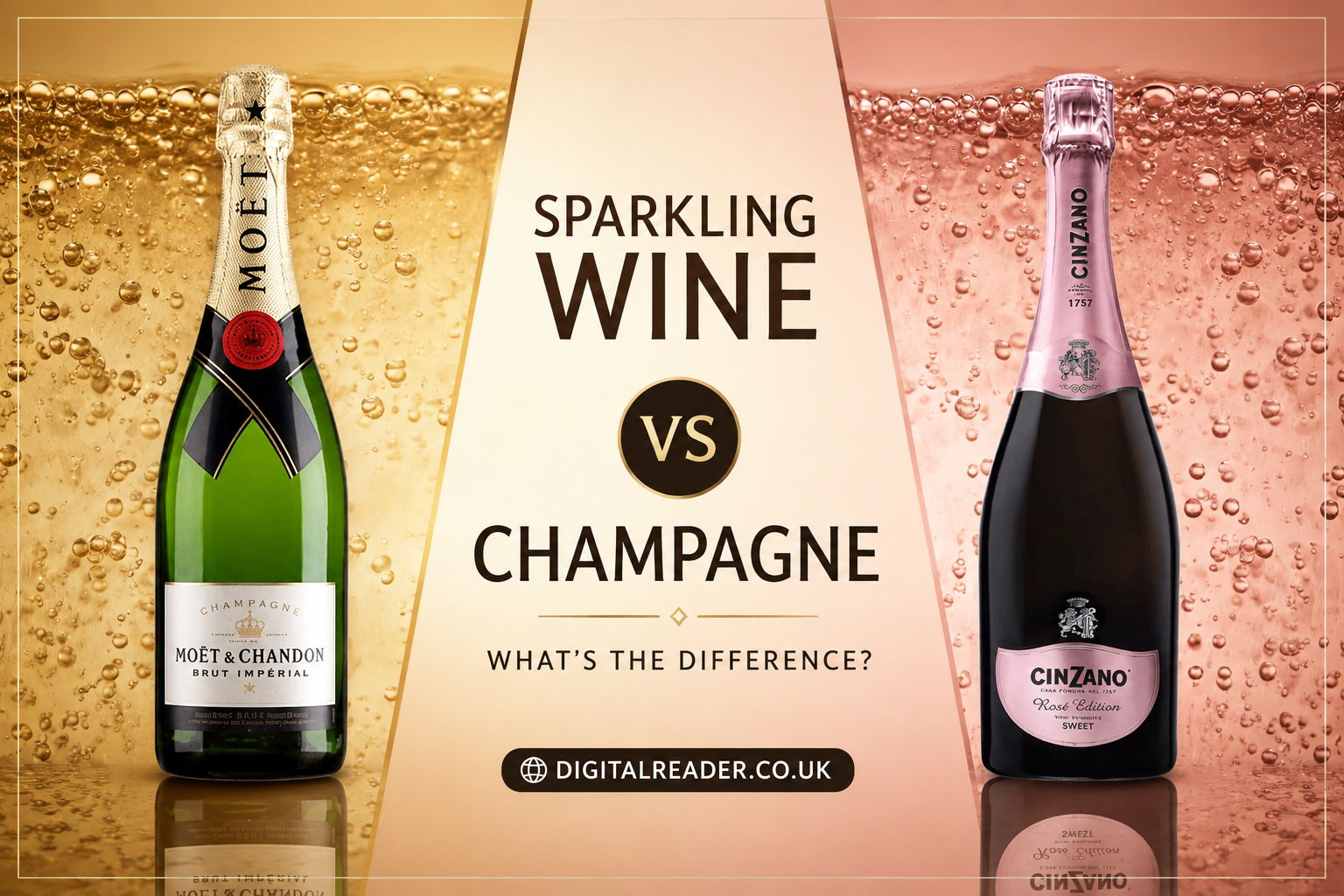
Sparkling wine is any wine with visible carbonation, created either through a second fermentation (which naturally produces carbon dioxide) or by injecting CO2 directly into the finished wine. It’s a broad category — Champagne, Prosecco, Cava, and American sparkling wine are all technically “sparkling wine,” but they’re made differently and taste noticeably different from one another.
The bubbles themselves come from trapped carbon dioxide, and the method used to create that carbonation is a big part of what separates a $12 bottle from a $60 one.
Champagne flute being poured with visible bubbles rising. “sparkling wine glass pour bubbles”
Is Sparkling Wine Champagne?
No, not all sparkling wine is Champagne. Champagne is a specific type of sparkling wine that can legally only be produced in the Champagne region of France, using approved grape varieties and the traditional method of secondary fermentation in the bottle. & more blogs to see fresh .
What Makes Champagne Different
Three things legally define Champagne:
- Geography. It must come from the Champagne region in northeastern France. No exceptions — a sparkling wine made anywhere else, even using the exact same method, cannot legally be called Champagne.
- Grape varieties. Champagne is made primarily from Chardonnay, Pinot Noir, and Pinot Meunier.
- Production method. Champagne uses the méthode champenoise (also called the traditional method), where the second fermentation that creates the bubbles happens inside the individual bottle, not in a large tank.
That bottle-by-bottle process is labor-intensive, which is a major reason Champagne tends to cost more than other sparkling wines.
Other Sparkling Wine Regions and Styles
- Prosecco (Italy) is typically made using the tank method, where the second fermentation happens in a large pressurized tank rather than individual bottles. This produces lighter, fruitier bubbles and a lower price point.
- Cava (Spain) uses the same traditional bottle-fermentation method as Champagne, which is part of why Cava often over-delivers for its price.
- Crémant (France, outside Champagne) also uses the traditional method and is often described as a more affordable cousin to Champagne.
- American sparkling wine (California, Oregon, Washington) ranges widely in method and quality, from mass-produced tank-method bottles to small producers using the traditional method with real finesse.
Sparkling Wine vs. Champagne: Quick Comparison
$–$$
| Style | Region | Method | Typical Price | Flavor Profile |
|---|---|---|---|---|
| Champagne | Champagne, France | Traditional (bottle) | Toasty, yeasty, complex, fine bubbles | |
| Cava | Spain | Traditional (bottle) | –$ | Crisp, citrusy, similar structure to Champagne |
| Prosecco | Veneto, Italy | Tank method | –$ | Fruity, floral, lighter bubbles |
| Crémant | France (non-Champagne) | Traditional (bottle) | $$ | Similar to Champagne, softer price |
| American sparkling wine | US | Varies | –$$ | Ranges from fruity/simple to complex |
How to Choose the Best Sparkling Wine
There’s no single “best sparkling wine’s” — the right pick depends heavily on the occasion, your sweetness preference, and your budget. Here’s how to narrow it down.
By Occasion
- Casual brunch or mimosas: Prosecco or Cava — both are affordable and mix well with juice without wasting a more expensive bottle.
- Toasting a milestone: A Champagne or a traditional-method Crémant, which delivers more complexity for a special moment.
- Everyday sipping: A dry American sparkling wine or Cava, which tend to offer good quality without a special-occasion price tag.
- Dinner party pairing: Match dryness to the meal — drier sparkling wines pair better with savory or salty food, while off-dry styles work well with spicier dishes.
By Sweetness Level
Sparkling wine’s labels use specific terms to indicate sweetness, from driest to sweetest:
- Brut Nature / Extra Brut — bone dry, minimal to no added sugar
- Brut — dry, the most common style and a safe default for most occasions
- Extra Dry — slightly sweeter than Brut, despite the name (this one trips people up)
- Demi-Sec — noticeably sweet, good with dessert
- Doux — very sweet, dessert wine territory
“Brut” sparkling wine’s is dry, not sweet — despite sounding otherwise, it’s actually drier than a wine labeled “Extra Dry.”
Pros and Cons of Popular Sparkling Wine Styles
| Style | Pros | Cons |
|---|---|---|
| Champagne | Complex flavor, prestige, ages well | Highest price point |
| Prosecco | Affordable, approachable, great for mixing | Less complex, doesn’t age as well |
| Cava | Great value, Champagne-like method | Less brand recognition, quality can vary by producer |
| American sparkling wine | Wide price range, food-friendly styles | Quality inconsistent across brands |
Non-Alcoholic Sparkling Wine: What to Know
Demand for non-alcoholic sparkling wine’s has grown significantly as more people cut back on drinking without wanting to skip the ritual of a toast. Quality in this category has improved noticeably in recent years, though it’s still a different product than fully alcoholic sparkling wine’s.
How It’s Made
Most non-alcoholic sparkling wine’s falls into two categories:
- Dealcoholized wine — starts as a real, fully fermented wine, then has the alcohol removed afterward using heat or vacuum distillation. These often retain more genuine wine character, but can legally still contain trace alcohol (up to 0.5% ABV) and still be labeled “non-alcoholic” or “dealcoholized” in the US.
- Built-from-scratch alternatives — start as grape juice, tea, or other bases and are flavored to mimic wine’s taste profile without ever fermenting into alcohol. These are typically 0% ABV but can taste noticeably different from traditional wine.
What to Look For on the Label
- Check the ABV directly. “Non-alcoholic” and “alcohol-removed” labels can still legally contain up to 0.5% ABV in the US. If you need true 0% alcohol, look for that number specifically on the label rather than relying on marketing language alone.
- Sparkling styles tend to translate better than reds. Reviewers and sommeliers who taste-test these products consistently note that white, rosé, and sparkling non-alcoholic wines are easier to get right than full-bodied reds, since bright acidity and bubbles help fill in for what alcohol normally contributes to body and mouthfeel.
- Sugar content varies widely. Some non-alcoholic sparkling wines lean sweet to compensate for the lack of alcohol’s usual mouthfeel — check the nutrition label if that matters to you.
Non-alcoholic sparkling wine’s bottle next to a filled glass. “non alcoholic sparkling wine bottle and glass”
Why This Matters
Understanding these distinctions isn’t just wine trivia — it directly affects what you’re paying for and what you’re serving guests. Calling every bubbly bottle “Champagne” is a bit like calling every tissue a “Kleenex” — convenient shorthand, but it can lead to real confusion (and overpaying) when you’re actually trying to buy the real thing, find a better-value substitute, or navigate the growing non-alcoholic category without settling for something that tastes like flat soda.
Expert Recommendations
- Don’t assume higher price always means better quality outside Champagne. A well-made Cava or Crémant frequently outperforms a mediocre, overpriced bottle riding on brand name alone.
- Chill sparkling wine properly — around 43–47°F (6–8°C) is the sweet spot. Too warm, and the bubbles turn flat-tasting fast; too cold, and you mute the flavor entirely.
- For non-alcoholic options, start with sparkling rosé or white styles rather than red, since reviewers and category experts consistently rate them as the most successful non-alcoholic wine styles currently on the market.
- Save true vintage Champagne for genuine special occasions — its complexity is largely wasted in a mimosa or spritz.
Mistakes to Avoid When Buying or Serving Sparkling Wine
- Assuming any sparkling wine can legally be called Champagne — it can’t, and using the terms interchangeably can lead to real overpaying.
- Buying “Extra Dry” expecting it to be the driest option — Brut is actually drier, despite the name.
- Serving sparkling wine too warm, which flattens both the bubbles and the flavor.
- Assuming all non-alcoholic wines are 0% ABV — many “alcohol-removed” labels still legally contain trace alcohol.
- Popping a nice bottle without letting it chill fully first, which wastes both flavor and fizz.
Conclusion
The bubbles in your glass tell a more specific story than most labels let on — whether it’s true Champagne, a tank-method Prosecco, or a non-alcoholic pour, each one is made differently and built for a different moment. Once you know that Brut is drier than “Extra Dry,” that Cava can rival Champagne’s method at a fraction of the price, and that “non-alcoholic” doesn’t always mean zero alcohol, you’re no longer just guessing in the wine aisle — you’re choosing on purpose.
FAQs
Is sparkling wine the same as Champagne?
No. All Champagne are sparkling wine’s, but not all sparkling wine is Champagne. Champagne must come specifically from the Champagne region of France and follow strict production rules.
What is the best sparkling wine for beginners?
A dry Cava or Prosecco is a good starting point — both are affordable, approachable, and widely available, making them easy ways to explore sparkling wine styles before investing in Champagne.
Is non-alcoholic sparkling wine actually good?
Quality has improved substantially in recent years. Sparkling and rosé styles are generally considered the most successful non-alcoholic wine categories, since bright acidity and bubbles help compensate for what alcohol normally adds to the wine’s body.
Does non-alcoholic sparkling wine have any alcohol in it?
Often, yes — trace amounts. US labeling rules allow products marketed as “non-alcoholic” or “alcohol-removed” to contain up to 0.5% ABV. Check the label for the exact percentage if you need zero alcohol.
What’s the difference between Brut and Extra Dry sparkling wine?
Brut is drier than Extra Dry, despite what the name might suggest. Brut is the standard dry style; Extra Dry is actually slightly sweeter.
What temperature should sparkling wine be served at?
Around 43–47°F (6–8°C), which is colder than most red wines but not ice-cold. Proper chilling preserves both the bubbles and the flavor.
In Short
- Sparkling wine is a broad category; Champagne is a specific, legally protected type of sparkling wine from France.
- Cava and Crémant use the same traditional production method as Champagne, often at a fraction of the price.
- “Brut” is drier than “Extra Dry” — sweetness labeling doesn’t always match intuition.
- Non-alcoholic sparkling wine quality has improved significantly, with sparkling and rosé styles performing best in taste tests.
- Always check the actual ABV on non-alcoholic labels — many still contain trace alcohol.