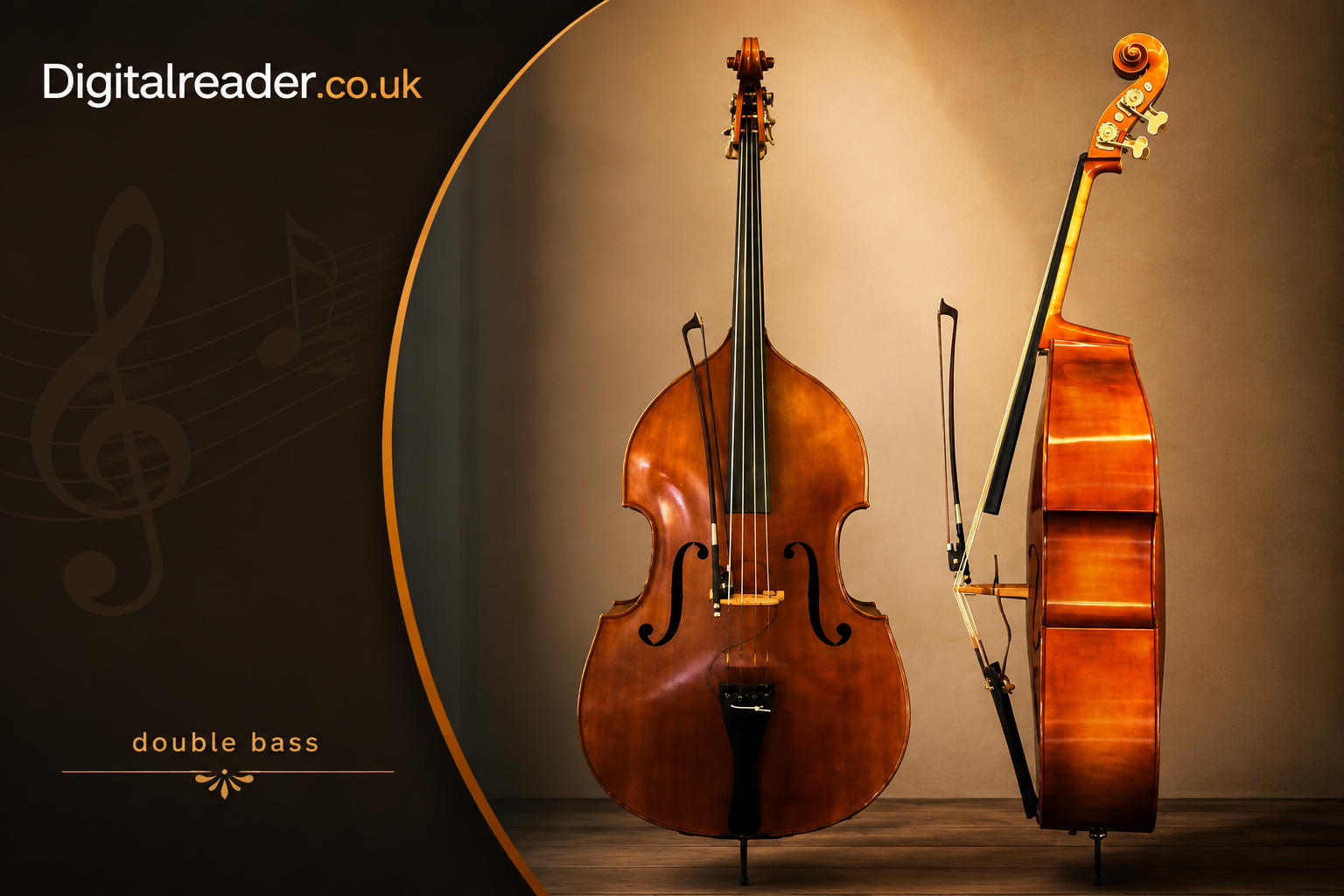
Standing over six feet tall, the double bass is impossible to ignore — yet most people can’t explain what makes it different from a cello, how a double bass pedal fits into the picture, or what to look for when a double bass for sale finally catches their eye.
If you’ve ever felt embarrassed nodding along in a music store while the salesperson talks about “3/4 size” basses, or you’ve searched “double bass vs cello” three times without a straight answer, you’re not alone. This confusion costs beginners money, time, and confidence.
This guide clears it all up. By the end, you’ll understand exactly what a double bass is, how it compares to a cello, how a double bass pedal works, and how to buy the right one without regret.
What Is a Double Bass?
The double bas’s is the largest and lowest-pitched instrument in the string family, used in orchestras, jazz ensembles, bluegrass bands, and rock music alike. It’s also known as the upright bass, contrabass, or stand-up bass.
Unlike most string instruments, the double bass is tuned in fourths rather than fifths, which affects how bassists approach fingering and scales. Its deep, resonant tone forms the harmonic foundation of countless musical genres. & more blogs to see fresh .
Anatomy of the Double Bass
A standard double bass includes:
- A hollow wooden body (spruce top, maple back and sides)
- Four strings (some models have five)
- A long neck and fingerboard
- An endpin that rests on the floor for support
- F-holes that project sound
How the Double Bass Is Played
Players either pluck the strings (pizzicato) or use a bow (arco). Pizzicato dominates jazz and popular music, while arco technique is standard in classical orchestral settings. Because of its size, the double bass is typically played standing or seated on a high stool.
Double Bass vs Cello: What’s the Real Difference?
This is one of the most searched comparisons in string instruments, and for good reason — at first glance, they look similar.
Size and Range
The double bass’s is significantly larger than the cello and produces a lower pitch. A full-size double bass stands around six feet tall, while a cello measures roughly four feet.
Playing Position and Technique
Cellists sit and hold the instrument between their knees, resting it on an endpin. Double bassists typically stand, or sit on a tall stool, with the instrument angled against the body.
Comparison Table
| Feature | Double Bass | Cello |
|---|---|---|
| Height | ~72 inches | ~48 inches |
| Tuning | E-A-D-G (fourths) | C-G-D-A (fifths) |
| Playing Position | Standing or stool | Seated |
| Common Genres | Jazz, orchestral, bluegrass, rock | Classical, chamber, film scores |
| Sound Range | Lowest in string family | Tenor/baritone range |
| Learning Curve | Moderate to challenging | Moderate |
Understanding the Double Bass Pedal
Here’s where things get interesting for modern musicians — the term “double bass’s pedal” actually belongs to drumming, not the double bass’s instrument itself, and this mix-up sends a lot of searchers down the wrong path.
What a Double Bass Pedal Does
A double bass pedal (also called a double kick pedal) is a drum hardware accessory that lets a drummer play two beats on a single bass drum using both feet, instead of needing two separate bass drums. It’s essential in metal, hard rock, and progressive drumming styles.
Types of Double Bass Pedals
- Chain-drive pedals — smooth, consistent feel, popular with beginners and pros alike
- Direct-drive pedals — faster response, preferred for extreme speed genres
- Belt-drive pedals — lighter action, less common but favored by some jazz-fusion drummers
If your search intent was specifically about drumming gear, this distinction matters — don’t confuse it with double bass’s string instrument accessories like bows, rosin, or pickups.
Buying a Double Bass: What to Look For
Double Bass Sizes Explained
Double basses come in fractional sizes: 1/4, 1/2, 3/4, and 4/4 (full size). Most adult players use 3/4 size, as full-size basses can be physically difficult to manage even for tall players.
Where to Find a Double Bass for Sale
When searching for a double bass’s for sale, consider these sources:
- Specialty string instrument shops (best for setup and after-sale support)
- Certified used-instrument dealers
- School or orchestra instrument liquidation sales
- Reputable online marketplaces with return policies
Expert tip: Always test the action (string height) and check for cracks near the sound post before buying, especially with used instruments.
Mistakes to Avoid When Buying
- Buying full-size when 3/4 fits better
- Ignoring the bow quality (a bad bow ruins a good bass)
- Skipping a professional setup/inspection
- Choosing based on price alone over tone and playability
Why This Matters
Understanding these distinctions isn’t just trivia — it directly impacts your budget, your practice experience, and your long-term enjoyment of the instrument. Buying the wrong size double bass’s can lead to poor posture and repetitive strain injuries. Confusing a double bass’s pedal with double bass’s strings could mean wasting money on the wrong gear entirely. Getting this right the first time saves both money and frustration.
Expert Recommendations
- Beginners should rent before buying to confirm size and commitment.
- Always pair instrument purchases with a professional setup from a luthier.
- New players benefit from private lessons focused on bow hold and hand position early on, since bad habits are hard to unlearn later.
- Drummers shopping for a double bass’s pedal should prioritize durability and adjustable tension over price.
Conclusion
The double bass’s is a uniquely versatile instrument — towering in size, foundational in sound, and central to genres ranging from orchestral classics to modern jazz. Knowing how it differs from the cello, understanding the unrelated but commonly confused double bass’s pedal, and buying smart when you find a double bass’s for sale will set you up for years of confident playing.
FAQs
Is a double bass the same as an upright bass?
Yes. Double bass’s, upright bass, and contrabass all refer to the same instrument.
Is double bass harder to play than cello?
Both have learning curves, but the double bass’s demands wider finger stretches and more physical strength due to its size and string tension.
What size double bass should a beginner buy?
Most adult beginners do best with a 3/4 size double bass’s, as it balances tone quality with manageable size.
What is a double bass pedal used for?
A double bass’s pedal allows drummers to play rapid double bass drum beats using one bass drum and both feet, common in metal and hard rock music.
How much does a double bass cost?
Beginner double basses typically range from $1,500–$4,000, while professional instruments can exceed $10,000–$50,000 depending on craftsmanship and age.
Can a cello player switch to double bass’s easily?
Cellists have a head start in reading bass’s clef and bowing fundamentals, but the different tuning system and larger size still require dedicated adjustment time.
In Short
- The double bass is the largest, lowest-pitched member of the string family.
- Double bass vs cello differences include size, tuning, playing position, and genre use.
- A “double bass pedal” refers to drumming equipment, not the string instrument.
- Most adult beginners should choose a 3/4 size double bass.
- Always get a professional setup and test the instrument before buying used.